Showing posts with label capitalism. Show all posts

Monday, 26 July 2021

Human Irrationality is an Argument For – Not Against – Free Markets

If everyone was irrational all of the time we would be in big trouble. You’d never know when someone was suddenly going to swerve off the road for no apparent reason and drive into a building, or start babbling to you in tongues over the phone when all you wanted to do was order a pizza.[1]

That being said – people are irrational enough of the time, that behavioral economists are never done telling us that they are not suitable for a market economy and need regulations to “nudge” them in the right direction. They illustrate the point with examples such as the fact that if you want to motivate someone to run you are better giving them $105 dollars a week then fining them $15 a day every day they don’t run, than rewarding them with $15 a day every day they do run ~ even though these things essentially amount to the same thing. So, naturally, we need policymakers to save us from ourselves and make us do the right thing. The irony of this position is that it presupposes that people are rational enough to respond to the incentives the behavioral economists want to mete out to them. Meanwhile, entrepreneurs have been doing more to devise apps that interphase with human psychology and help them adopt better habits than governments ever have! After all, it was the market that gave us Fitbit, mindfulness apps, nicotine gum, calendar apps with build in alarms to make sure we don’t forget appointments; the list goes on and is ever increasing.

For the main part, the market is what defends us against the consequences of the irrationality of others. I will define, for our purposes, rational as: having and acting upon beliefs that are in accordance with reality.[2]

If someone was irrational at all times in all respects, they could not meet the demands of life or sustain themselves, therefore they would either be dead, under the care of others, in a mental institution, or in prison. So, while no one is rational all the time, most people are at least rational enough of the time to exist within a society.

The great thing about the market is, as far as we are concerned, others only need to be rational upon the basis we deal with them. My mechanic might be a raving lunatic who drives his wife up the wall (no pun intended) with his crazy theories about the flat earth and interdimensional big foot people when he is at home, but so long as he is rational when it comes to the operations of fixing my car, it need not be any concern of mine. The pizza delivery guy could have views on race that most people find abhorrent, and I would never even know so long as he delivered it on time! The architect hired to design a bridge for a new highway might be a fanatical communist who thinks all property should be publicly owned, but as long as he is rational enough to follow the laws of physics when it comes to the blueprints, the bridge won’t be built upside down and will not collapse under the weight of the vehicles crossing over it. No one is remunerated on the market for doing irrational things, for example, bringing Squid Waffles to market. No one is interested in buying or eating Squid Waffles. Therefore, they don’t exist.

Now, need I point out, that none of this is the case when it comes to the alternative to the market, which is the political process. All of a sudden everyone’s crazy, irrational views that were none of my business become very real problems to me, because they are going to entre the voting booth and try and model a society that is fashioned based upon them. Someone might even lobby for a government subsidy to open up the first ever Squid Waffles diner! Sound crazy? Well how come the government both subsidizes and taxes tobacco at the same time? This is seemingly “irrational” but it makes sense when you understand that one lobbying block wants tobacco farmers to remain in business, and another wants people to smoke less.

While people’s performance on the market is tied to their rationality, ie., the fact that their views conform to reality and therefore they can deliver the desired results, there is no such failsafe at the ballot box. In fact, as the public choice theorists have been pointing out to us, it’s rational for voters to be ignorant about abstract topics like economics, political science, sociology, statecraft and basically anything necessary to cast a good vote, because learning the facts is time consuming and costly with very few payoffs.[3]

Typically, when you go into the world with irrational views that affect your day-to-day life you will be met with negative consequences. If you have irrational views about eating, you will get sick; if you have irrational views about how to treat your spouse, you will have unpleasant arguments or even a divorce; if you have irrational views about how to run a business, you will soon go bankrupt. In other words – reality provides a corrective against irrational views, or at least tries to!

The dirty secret about government is that replacing the market with its “democratic” control – be it public institutions or regulations – ends up removing this corrective mechanism and encouraging irrational behavior. No one wants to suffer the negative consequences of their own irrational behavior, whether it be an illness resulting from not having taken care of their health, or having a child they can’t support, or setting up a business to sell a line of products for which there is no demand. But democracy is inherently a system where people can make bad decisions and then vote to expropriate the consequences of those decisions to everyone else via the tax system. Those people who conform to reality by building products and providing services that meet the real needs of other people will essentially be punished for good behavior when the tax man comes around to expropriate their gains to pay for rent seekers and vagrants. This creates a tendency towards more costly, irrational behavior and less beneficial, rational behavior in society relative to what there would be on a free market. Over the long term, everyone will be disadvantaged on the whole, including those who seemingly profit from exporting the negative economic consequences of their actions to the body politic because the society they live in will be far less prosperous.


[1] I note that some economists, following Ludwig von Mises, take the position that people are always rational. What they mean by that is that all human behavior is goal-directed behavior and that when someone makes a choice they are choosing what they think will make them achieve that goal. (Mises: “A historian can say... In invading Poland Hitler and the Nazis made a mistake... All that another man can say about it is: I would have made a different choice.” – Theory and History) In my view that is a very specialized usage of the world rational, so I am going with the more commonly used understanding of the term.

[2] Please spare me debates about what reality is or how we know we can know it, Mr. Descartes.

[3] See, for example, Caplan, B. (2007) “The Myth of the Rational Voter.”

Monday, 3 August 2020

Private Ownership of the Means of Production confers a Social Benefit

Perhaps the most difficult battle faced by the advocates of free markets it to convince people that Private Ownership of the Means of Production is not some special privilege conferring and advantage to "greedy capitalists" at the expense of everyone else, but that it serves a social function that is beneficial to all.

Private ownership makes the accumulated wealth of the entrepreneur a slave to the consumer - that is - to everyone else. We commonly understand private ownership to mean "for our own use," eg. the use of a toothbrush or a private residence, but in the case of private ownership, what is owned is almost exclusively for the use of others, placed at their service.

The capitalist keeps his wealth only to the extend he continues to use what he has accumulated in the interests of the masses, as they judge them, by churning out whichever goods and services they demand. To the extent he succeeds, his wealth will grow. This is the economy’s way of saying that he makes sure and wise decisions with the capital we have amassed as a society - not wasting them on projects that the public have no interest in paying for. To the extent he fails to do so, those factories, machines and companies that his investments represent will be sold on at knock-down rates to whoever thinks they can do a better job of managing them in the public interest. This allows for the constant re-allocation of capital to those who can best manage it, and engenders the accumulation of more capital over time. As the capital stock increase there is more wealth generation and technological advancement can be expected, and this will necessarily be largely led by the preferences of consumers, not those who actually "own" the capital.

Saturday, 26 January 2019

Capitalism is not "A System of Competition"


Capitalism - A System of Competition?

Capitalism has often been described by as “a system of competition” by its adversaries, or a system “based on competition.” Naturally, this assertion is usually coupled with a spirited oration on how this “tooth n’ nail” competition psychologically corrupts us – pitting man against man in a “race to the bottom.”

Many of capitalism’s most vocal advocates have, themselves, imbibed this premise uncritically. They leap to a fervent defences of competition, extolling its virtues – real or perceived. In my view this is a mistake. To accept without evaluation the presupposition that capitalism is a system of competition – in contrast to other hypothetical systems of cooperation (namely socialism and communism) – is to frame the very debate itself in leftist terms and play the game on an unfairly tilted game-board.

Competition is Fierce for Government-Controlled Resources

This is not to say that those who defend competition do not raise some worthy points. For example: If not competition, then what is the alternative? Is there to be one central provider of each good and service available who gets to decide on our behalf how it is best to be produced and then allocated? Add to that, that if competition is wrong in the market, then why not in the political sphere? Surely democracy is out of the question if competition is a corrupting factor, because what do political candidates do if not compete for office? Think of the competition this generates between political parties, not to mention the ensuing competition between firms and individuals for preferential treatment from politicians and legislators, competition between lobbyists, think-tanks, and voters, to receive benefits out of the public purse. If the free and voluntary section of society is a system of competition, how much more so is government? Surely democracy is a “system of competition.” Politicians are competing for the very machinations of control in our society. For the right to pass and enforce laws which apply to everyone (whether they agree with them or not) and to force them to pay for their enforcement. They are not simply competing for market share where the winner of the competition is the one that satisfies the most demand. We can sidestep the more mundane economic arguments in favour of competition for the moment, such as the case that it increases efficiency and cheapens goods while driving innovation, as we are all familiar with them already.

Capitalism is a System of Voluntary Exchange

Nonetheless, parsing what is essentially a sociological debate – a meditation upon the effects of an economic environment upon the soul of man – in socialist terms; basing it upon left-wing premises without examining their foundation is to cede too much ground. A comical equivalent would be for a leftist responding to the clichéd assertion of the American right that “Hitler was a Socialist!” by arguing that many of his labour policies were successful in improving social conditions for the working class.

This is not to say that competition is necessarily an evil either. The problem lies in defining capitalism as “a system of competition” - in comparison to other systems which are somehow “cooperative”; that is a rhetorical ploy. Those who profess it may honestly believe it to be so, but it’s not true. Capitalism is not “a system of competition” any more than any other system. Capitalism (at least in its free-market, laissez faire ideal) is a system of the voluntary exchange of goods and services in the absence of physical coercion, theft, compulsion or fraud, predicated upon the fundamental right to own and accumulate property.

Or, for brevity: Capitalism is a system of voluntary exchange, predicated upon the right to own property.

One might even venture, therefore, that capitalism is a system of voluntary cooperation.

Granted, this definition still leaves room to debate the morality of accumulating property. Or perhaps whether the “negative” right to ownership when it comes to the rich should take precedence over the “positive” right to healthcare or education at their expense when it comes to the poor. We can even debate whether the relationship between capitalists and their employees are really free of coercion given the power disparity between the two groups. Indeed these are debates I delight in exploring further. However, there is no justification for defining capitalism as a system based upon competition.

Because Scarcity is a Fact of Life, Competition will Exist under Any System

The reason for this is that while the voluntary exchange of goods and services may give rise to a certain amount of competition, competition does not give rise to the voluntary exchange of goods and services. Scarcity does. In any situation of scarcity of resources, there is bound to be some form of competition over those resources (as well as over how those resources are allocated). To exemplify the mistake that is being made here, consider the uncontroversial statement: “The fact that things exist gives rise to motion.”; Now, if I were to conclude that because of this, “motion itself gives rise to the material world,” that would be a weird conclusion to reach. Motion is a feature of the material world, not what defines it or gives rise to it. Similarly, competition is a feature found within a capitalist economy, but it is not its defining feature, nor is it only a feature of capitalism…

If we have a system that allows voluntary exchange, some competition is bound to arise out of that, but that would happen under any system. Even if you had a completely communistic society, which was centrally planned and involved no exchange of money whatsoever, people’s time would still be limited. If you were a film maker in this society, you would probably want as many people to see your films as possible. As would every other film-maker. That would put you at least somewhat in competition with them. Does this mean that communism, too, is a system of competition? Certainly you would be competing for the only customer – the sponsorship of the state. Corruption and cronyism would surely be the result. Who gets their film made and who doesn’t? Who allocates the highly desirable job of being a film-maker over the undesirable job of being a street-sweeper or refuse collector, and how can their favour be courted? The competition will commence, but instead of being decided by the free and voluntary exchange of film-goers, investors and film-makers it will be decided by someone else, I would argue, in a rather more authoritarian fashion. (For a particularly vivid and chilling illustration of how communism substitutes market competition over customers [which is at least tied to the provision of desirable services] for the completely unmeritocratic competition over gaining favour from the corrupt power structure of the state, I refer the reader to Ayn Rand’s first novel, We The Living.)

Competition is a feature of living in a world of scarcity and would exist in any system. Socialism cannot do away with competition – nor can any other system. Therefore it is wrong, both logically and polemically, to define capitalism as “a system of competition” in contrast to socialism; let alone define communism – a system where individuals will have to compete for the favour of authorities who make decisions on their behalf – as a system of cooperation.

Scarcity Means Competition Extends Beyond the Economy

The implications of these facts reach into any circumstances of scarcity beyond the economy. For example, supposing two friends each invite me over to dinner of an evening, I might have to make a choice between their invitations which will result in one of them losing out on my company. Does this then mean that friendship is a system of competition?

We can’t see all of our friends all of the time, or even all of them at the same time. Even if we do, we are bound to have to split our attention between them. In addition to that we can only maintain so many close friendships at once, and we definitely can’t be friends with everyone. All of this means that inevitably we have to make choices. We each make decisions on who to make and maintain friendships with based upon our value judgements, conscious or unconscious. Perhaps based on how happy we feel around them, how long we have known one another, how much we have in common, how much we trust someone or how loyal they have shown themselves to be, how much they educate, enrich or enlighten us, or perhaps based upon what roles roles they allow us to fulfil in their lives. There can be countless other reasons. The fact is we decide. People who feel that they will benefit from our company, for whatever reason, will make attempts to spend time with us. We will invariably begin to make choices on who to spend time with based upon our values, schedule, and what other activities we are willing sacrifice to see them. These are basic facts of life, but they hardly make friendship a system of competition.

Similarly, on the market, our time and resources are limited. We make value-based judgements about choices of products and services to consume based upon what utility we think they will bring to us, sacrificing some options to others. Maybe we will choose a coffee shop based on which has the best tasting coffee, or maybe based on which provides the nicest atmosphere, or maybe based on which is closest, or where the customer service is best, or which is the cheapest, or which we have gone to the longest and therefore find familiar, or perhaps even based on which we think has the best ethos – for example, because they are a social enterprise that only sells fair trade produce and deliberately seeks to employ and train disadvantaged people. The fact is we decide. Each service provider believes they will benefit from our custom and will make attempts to attract us, placing an upward pressure on the quality of services and a downward pressure on price which we may correctly identify as a form of competition. Since human beings are not infallible, sometimes someone might buy a coffee that they don’t end up liking, but over the long term the competition is likely to be won by the satisfaction of customers.

Free to Choose

The miraculous wonder we miss when we focus our attention upon the competition which derives from choice is the ability to choose itself. For example, supposing two commercial events are being held on the same evening. Each perspective patron will want to choose whichever event appeals to them the most, and for whatever reasons they choose based upon what they value in an event. Now, to simply mention that these events are “in competition” would be to completely miss the crucial point that event-goers (who are in the majority compared to event-organizers) have a choice of two events which they may prefer to go to one of rather than one alone.

There is no necessity for competition implicit in the market either. If both events are in jeopardy due to a lack of patrons, then their organizers can always put their heads together and create one bigger, better event. Or they can choose distinct themes that are aimed at different audiences, or perhaps they will agree that it would be in their interests if one of them moved their event to a different night, and they could cross-promote one another. This is part of the free choice the market affords, unless the government has passed laws against it, calling it “collusion.”

The defining feature of the market, clearly, is not competition, but choice. The freedom to choose. It is only when event organizers can go to the government to force people to buy tickets, or shut down other events, or get preferential legislation passed to make it easier for them to advertise, or regulate the market so tightly that only established events-managers can survive, that we see competition become the dominant force. Coercion has entered the market which is no longer free. This is not free market capitalism but what we observe in many sectors of our society today – crony capitalism, or “neo-liberalism” as some may call it. (Unfortunately the failings of “neo-liberalism” are endlessly pinned on the market economy itself rather than the state’s nefarious influence in the market.)

It is worth mentioning that there is actually far more cooperation involved in providing people with goods and services than competition. You have to cooperate with buyers, sellers, managers, employees, suppliers, customers, advertisers, promoters, marketers, collective buyers, and so on. Leonard E. Read (1898-1983), founder of the Foundation for Economic Education, illustrated this in his most famous essay, I, Pencil, first published in 1958. In it he noted that not a single person on the face of this earth knows how to make a pencil. He goes onto explain that the cedarwood is sourced from Oregon and the logs milled in California. The graphite is mined in Ceylon, mixed with clay from Mississippi, then treated with a hot mixture which includes candelilla wax from Mexico to increase its strength and smoothness. The six coats of lacquer come separately from the growers of castor beans and the refiners of castor oil. In fact, when you include those who manufacture and transport the equipment involved in these processes you cannot help but marvel at the fact that millions of people have a hand in its creation. They are working in concert, in cooperation, and as a result you can get a pencil for pennies.

To the extent that it is free, the self-interest of the producer is subordinated to the hardly antisocial end of meeting the desires of others. A producer wins the competition only by organising a vast degree of cooperation in the service of satisfying the demand of consumers. This means producing things that regular people like you and I value enough to part with their scarce resources for. To the extent the government interferes in the market, firms are enticed to compete over government contracts, subsidies, preferential legislations, and so forth. This is a corrupting factor in the market as companies no longer have to focus on serving consumers but doing whatever it takes to beguile officials. Sometimes that may well be providing the best service, but this becomes far more likely as the end user is no longer the buyer. Instead they may lobby, bribe, or bait with promises of high paying positions for officials after they leave office. In my book Universal Basic Income – For and Against I note that according to The Sunlight Foundation, a non-partisan, non-profit organization that aims to make government more accountable and transparent, “For each of the 5.8 billion dollars spent by America's 200 most politically active corporations between 2007 and 2012 on federal lobbying and campaign contributions they got $741 in return in kickbacks and benefits. This poses a tremendous problem because as soon as it becomes more profitable for a business to lobby the government than serve their customers then lobbying will become their top priority. This is why government is often a corrupting actor in the economy rather than a referee. The mutual benefit of politicians and big business getting in bed together often outweigh those of serving the public. These incentives drive companies to misallocate resources by making products that the general public doesn't want profitable, and products that they do unprofitable. In other words, the government has become the client of these corporations rather than their customers.” The competition has turned sour.
Those free-market advocates who extol the virtues of competition may point out that every service provider is, in one sense, actually competing with every other product that someone can possibly conceive of buying with their money, and argue that is a good thing as encourages firms to really try their best to create things that will please people in order to earn their cash and do business with them. Still, it cannot be said that capitalism is a system of competition – because competition is not the basis of the system, but choice. The freedom of consumers to choose gives rise to trial and error between competing service-providers attempting to draw a profit by catering broadly to as many consumers as possible or narrowly to meet certain niches depending upon their expertise and predilections. As human desires are infinite, there will likely always be incrementally more beneficial ways of meeting those desires, and thus infinite scope for innovation. What the market allows is for different producers to fill different niches. Buyers are able to compare the relative merits and drawbacks of competing products and vote with their cash on which they feel will better meet their needs according to their own values. Producers themselves are able to observe innovations in the marketplace and attempt to improve upon whichever products or services are already available. Customers will ultimately be the arbitrators of which models are successful and which will be weeded out the market. While there is clearly some competition in this process, overall it is a system of cooperation between buyers and sellers to reach a mutually satisfying voluntary exchange. In comparison to a centrally planned economy (or sector of an economy) where the amount of trial and error is very limited, and the state must roll out a one-size-fits-all solution scarcely tested against other possible solutions – a little competition between service producers might be worthwhile in exchange for a greater degree of autonomy and cooperative communication between service users and service providers which takes the form of supply and demand.

The beauty of the free market, when it is allowed to function, it that it is a constantly self-correcting and self-optimising system. Producers can reflect upon what is available and look for gaps in the market, or improvements upon existing services, and the public will quickly be able to provide signals of what is serving them and what is not by which variations they choose to part with their money for. Over time this leads to a general improvement in the standard of service available to them and decrease in cost which is probably why most of the products we buy are pretty decent. If someone sells a faulty watch then we have somewhere else to go for watches. If we did away with choice in the name of eliminating competition, if there was a design flaw in one watch it would have already been rolled out to every store and it would be too late. What is more if someone could think of any small way to make the watch better, more accurate, more durable, more energy efficient, the new model would probably not hit the market for fear of someone making another improvement upon it making all of those obsolete as well.

The Primary Feature of Capitalism is Choice, Not Competition

So to review, because people make choices with scarce resources and limited time, competition will be an inherent part of any economic system so long as there is scarcity. The primary feature of free market capitalism is not competition, but choice. Rather than moderate the amount of competition in an economy, state intervention will replace competition to serve customers on a voluntary basis with competition over gaining the favour of whoever is responsible for allocating resources within government. Instead of competing to serve their customers as best as they possibly can to achieve the biggest market share – firms can, will, and do, compete for government favours, and to have their products “rolled out” by the state to as many people as they can using public funds or subsidies out of the public purse. This is where the real “tooth and nail” begins.

Tuesday, 5 December 2017

Can Government Make a Business Run "For The Good of Society" ?

The New York Post recently reported that a judge in Indiana has temporarily barred Starbucks from closing 77 Teavana stores that were failing because "the very profitable Starbucks could absorb the financial hit". Industry experts said the ruling will send a chill down the spines of distressed retailers, and with good reason! The prospect of not being able to shut down an outlet that is bleeding the rest of the business may have countless unintended consequences that will affect not just owners but consumers in general. Firms are likely to take this as a signal to be more cautious about opening up new stores, and become reluctant to invest, take risks, and employ people in the first place. Customers stand to lose.

Amidst the debate upon the justice of the justice in question, I heard a voice clamour, "The question is not of profit, but whether a business should be run for society or society should be run for business!" and to be quite frank the claim struck me at first as vacuous; professing much while saying very little. Yet we must admit that throughout history many governments have believed they were "serving society" (rather than the business community) by forcing companies to fix prices, continue operations at a loss, or even subsidising or bailing them out with public funds. Many have believed this is in the interest of "the greater good."

Could it be that government forcing Starbucks to maintain unprofitable stores - in some circumstances - would be good for society?

First we should examine the use of the word "society" itself. Rather than bring clarity, it obscures the issue, making it more difficult to apprehend the facts of the matter. Who exactly is society and how do we measure what is and isn't good for it? Society is made of a whole bunch of different individuals and groups with different interests, and what is good for one might not necessarily be good for another.

It's not that keeping a Teavana open despite the owner's desire to close it won't be good for anyone; clearly the proprietor of the shopping centres is willing to fight hard for what they stand to gain, and certainly regular patrons will be happy to be able to get their regular cup of chai before leaving a hard-days-shop. However, the point is the move privilege a few individuals who want to continue going to those outlets at the expense of everyone else in the area who has demonstrated that they would rather something else opens up in that space instead. Starbucks then will need to recuperate the loss somehow or other, perhaps by increasing prices slightly at all other locations. If the locality can only sustain the demand for three tea houses and the unprofitable Teavana happens to be the forth then they are also bleeding demand away from the other three, and so on. We can continue counting negative consequences to other parties.

If Starbucks are deprived of however many millions it costs to operate 77 unprofitable stores that is less money they have to invest in stores that are wanted by enough people to keep them afloat. It's less cash for shareholders who will take it out to the shops to spend it or reinvest it in other businesses, it's less for Starbucks customers who have to pay slightly more for a cup of coffee and therefore don't have to spend on something else, it's less for Starbucks employees who might have to forego a raise because there is less to go around..

Clearly the effect of this policy is not something that can be broken down into whether it ‘benefits society’ or not. All we can say is that it benefits some groups and harms others.

It seems ironic to me that most of those who will cheer on the judges ruling, forcing Starbucks to run 77 tea outlets - against their own interests - for the interests of others are probably the most likely to complain when a Teavana opens up that it will "drive out" locally owned tea houses (which are probably actually collapsing under the strain of the regulations they have to comply with, not being able to afford Starbucks team of expensive lawyers and accountants.) If anything you'd think this crowd would be cheering on the closures! As they carry with them a certain prejudice that whatever vexes big business is necessarily good for the rest of us, we can only conclude that supporting the ruling is less about what is good for society and more about what is bad for Starbucks.


Friday, 15 September 2017

Surplus Value

It's still a very prevalent view that employers are somehow exploiting the people who work for them when they draw a profit from their business, despite the fact that a person's employer is clearly doing more for their finances than all of the people who are not employing them. I might add, perhaps somewhat facetiously, including those keyboard-warriors who claiming that entering someone into employment is exploiting them.

It is true that workers do get paid less than the total value of what they produce, but that is because what they produce is made with other resources which have to be bought, and in a factory or work place which has a price and requires overheads to operate. The capitalist is responsible for paying for marketing and advertising to link the product to potential buyers - and at the end of the day, if the product doesn't sell, everyone else has already been paid but the capitalist walks away with the loss.

The capitalist lays out a vision of what he thinks will meet people's needs better than they are being met at present. This requires a particular expertise which is in itself a labour contribution over and above that of the other employees which is unique to the entrepreneur. If his vision is clear, indeed he will make a profit. If it is faulty he will make a loss. This is not a necessary risk, absent the profit motive a rich person is more likely to buy a bigger house or go on a cruise. But the capitalist takes a risk now, and foregoes consumption, in hope that he will reap the benefit later. That is part of what he is being paid for.

Another part of what he is being paid for is the time between making the investment and getting paid for that investment. We would all rather have resources in the here-and-now than some time in the future, because the future is uncertain, that is why lenders can charge interest on money that they borrow. They are choosing to forgo a smaller amount of consumption now for a larger one in future. The workers get paid now, the capitalist gets paid later only after the product has sold, and only IF it is sold, after everyone else has been paid. Austrian Economist, Eugen von Böhm-Bawerk explained that far from exploiting labour, the capitalist removes the burden of waiting for income from the workers. If they wanted to produce the goods themselves they would also have to wait until they could find a buyer before gaining a stable wage, and first save or borrow in order to accumulate the resources to buy a factory or workshop without the help of the capitalist.

Finally, it's worth mentioning that the capitalist is increasing the value of the workers labour! If a man decides to try out the same manoeuvres which might get them somewhere in a factory out in a field it will not produce much of value to anyone else. Clearly workers can earn more working for their employer than for themselves otherwise they would simply declare themselves self-employed and get on with making a higher income. Perhaps some of them can earn more working for themselves but do not want to take on the responsibilities entailed which are currently met by the firm which employs them. This too is evidence that capitalists are providing value.

Marxists hold that capitalists simply skim their profits off the top while providing no value of their own. That they are "extracting surplus value" from their workers. But if that was true, non-profit organisations would just swoop in and undercut profit-making firms by eliminating the "dead weight" costs of paying a capitalist. They do not because they cannot. Capitalists are clearly providing some competence or vision which benefits their workers. Each benefits from the mutual exchange, as evidence by the fact that if the worker could get a better deal s/he would take it, and if the employer could find a better worker s/he would hire them instead.

Ultimately, wages are not an arbitrary figure but a reflection of how much value an employee is able to provide to a customer. If a person wants to do away with an employer they can do so by learning skills, either on the job or on the side, which will allow them to work for themselves. Likewise, profits are not arbitrary but a reflection of how much value a company is providing on the marketplace. Provided - of course - that they are drawing their profits from serving the market place rather than lobbying or appealing to the state, but that is another article.


"In order to show that it is a half-truth, we must have recourse to long and dry dissertations."
- Frederic Bastiat

Tuesday, 21 March 2017

Occupational Licensing

In 2015 Obama sent his council of economic advisers out on a fact finding missions to discover why job creation was so hard for the administration and this council - made up of a bunch of Democrats, right - not ideological free marketeers - concluded that demands for mandatory occupational licensing were creating terrible cartels, excluding workers and getting in the way of regular people wanting to start up businesses.

There are over 800 occupations that might require a licence in some states in America including a tour guide, manicurist, dog walker, librarian, locksmith, dry cleaner, auctioneer, fruit ripener, plumber, private investigator, Christmas tree vendor, florist, interior designer, funeral director, cab driver, shampoo specialist, glass installer, cat groomer, tree groomer, hunting guide, kick boxer, real estate agent, tattoo artist, nutritionist, acupuncturist, music therapist, yoga instructor and mortician.

On the back of people's justified fears of disastrous bridges being built by unqualified tradesmen and hapless patients being sliced open by quacks, government - with the help of protected industries - have managed to sell the myth that mandatory occupational licensing increases the safety and quality of services. People assume that if the government says its fixed its fixed. The reality is that mandatory occupational licensing far reduces the number of practitioners operating in any sector, and when consumers have less choice they have to take whatever they can get at whatever price they have to pay. As a result the quality of services can actually go down and prices up.

This is borne out by the empirical data:

After compiling a meta-analysis entitled, "Rule of Experts," S. David Young concluded “…most of the evidence suggests that licensing has, at best, a neutral effect on quality and may even cause harm to the consumers... The higher entry standards imposed by licensing laws reduce the supply of professional services…. The poor are net losers because the availability of low-cost service has been reduced.”

Stanley Gross of Indiana State University, had to concur, “…mainly the research refutes the claim that licensing protects the public.”

More recently economics PhD. Morris Kleiner released two publications (2006, 2013) for the Upjohn Institute for Employment Research demonstrating that licensing occupations does more to restrict competition that to ensure quality.

On a free market, the poor may have to sometimes settle for inferior services - but often that is better than no service at all which might be what they otherwise receive. Even so, the price of most services will come down over time if a multiplicity of firms are offering similar services: if not in price then in real terms as wages rise. There are more risks though. When people can’t buy services they might try to do their own work, their own electrical work, plumbing or dental work, this has often happened in the past, and sometimes the consequences can even be fatal.

Still, most people find it difficult to imagine how society might be protected from quacks without government-mandated occupational licences, so lets have a quick review of some of the market can account for this:

Market Competition. Consumers provide a large degree of regulation over markets by not repeatedly buying poor services and advising other customers of what to buy and what not to buy.
Consumer Watchdogs. Customers want to know which services offer the best value for money and are quick to consult experts in magazines or online for good information before they choose a provider.
Employer Discretion. Employers do not want to take on a poorly qualified civil engineer or plastic surgeon.
Registration. Third parties or groups of experienced practitioners can create registries of bonafide service providers. If a complaint is lodged against someone on the registry the administrators can investigate the case and strike them off if they are guilty or give them a warning.
Private Certification. In the absence of mandatory government licensing consumers will often want assurance from credible sources that the services they are going to pay for are of high quality - and more importantly - safe. Third parties can offer to certify practitioners that meet their standards.
Litigation. Customers already have protection under the law against faulty products or false advertising even in the absence of mandatory occupational licensing. The threat of being sued for causing damages is enough to deter most companies from releasing harmful products, if the threat of killing off their customers is not enough already.
Contracts. Customers can make explicit contacts with service providers to ensure they have recourse if they don't get what they think they are getting. If a company says the customer is getting x but gives them y the contract clearly delineates who is in the right and who is in the wrong.
Bonding. Individuals can engage in agreements in advance that involve third parties to ensure that payment is transferred when it is supposed to be.
Insurance. Customers can insure themselves against receiving faulty goods or receiving harm from services. In some cases the insurer will be able to bring litigation against the service providers for damages incurred offering a deterrent against providing poor services.
Jail. If the fact that it is not profitable in the long-term to kill of your customers is not enough to deter greedy capitalists from selling products that are physically harmful, the prospect of a jail term just might be.


Occupational Licensing simply come down to the government abolishing someone's right to provide services to someone else who is willing to buy those services, and then selling it back to that person at a fee. This is usually at the cost of several years in some educational institution where education in the necessary skills is dragged out over several years and supplemented with a whole bunch of written work that is superfluous to the exercising of those skills. The sum result of these policies are to drive otherwise capable people out of their passion because they are not academic, can't afford the education or the time off work, or can't look at another educational institution after the horrors of school. Willing students are saddled with debts and loss of work experience while they study and expect to recoup expenses from customers. All of this drives up the cost of products, reducing living standards for average people.


We see a real problem with this with the FDA when they allow highly dangerous foods - and people presume "the government has taken care of it, if it was dangerous it would be off the market" - when the opposite is the case. They have also held (and continue in some cases to hold) life-saving drugs off the market for decades at the expense of countless lives. They also have the monopoly on this service so it's impossible to compare their performance with any other agencies that might have had a much better record of making good judgements of food and drugs. With a multiplicity of firms acting in the sector you could compare their history for a sense of which might be the most reliable when it comes to what.

Saturday, 18 March 2017

10 Ways The Profit Motive Drives Sustainability.

Time for some heresy today.

Most people are given to thinking that the profit motive in a capitalist economy can only drive environmental destruction, but I am here to say that the profit motive has been acting as a massive bulwark against the kind of environmental destruction which was seen in the communist nations during the 20th century which far outstripped the damage done to the environment here in the west.

The idea that the desire for profit is ripping apart the environment seems so intuitive that you'd think it were beyond dispute. People take resources from the earth to make products and draw a profit, right?  And because corporations are only motivated by profit they will destroy the environment in pursuit of profit, won't they? Obviously.

Well, this is not the full story, lets investigate what is unseen.

1) A forest, fishery or grazing land is a renewable resource if properly managed. Keeping it in pristine condition will not only preserve (or even increases) the value of the land but will allow the owner to profit from it indefinitely. Laying waste to it for a quick buck would be like slaying a goose which laid golden eggs for a single dinner. This is why loggeries that are privately owned are handled sustainable whereas when land is leased out to firms by the government they usually mistreat the land for short term profit and leave the taxpayer to pick up the tab. Renters don't take as good care of their stuff as owners do.

2) Companies are always trying to decrease the cost of their inputs because the lower their costs of production the higher their margin of profit. This gives firms and active incentive to constantly find innovative ways of stretching the same amount of resources further. An example of this, often cited, is that Coca Cola have made their cans thinner than they used to be. There must be dozens of others. There is no comparable incentive to save resources by decreasing inputs in a centrally planned economy.

3) Those with the knowledge of how to stretch limited resources the furthest are the most likely to acquire them on a free market because they are able to pay more to acquire them owing to their larger projected profit. This will broadly lead to copper mines and oil wells ending up in the hands of the most competent custodians; so long as the state is not in charge of who gets what, a more competent owner will be able to buy-out a less competent owner.

4) On a free market the price system values resource inputs in proportion to how scarce they are and how many people want to use them. Therefore the most environmentally friendly way to produce something also becomes the cheapest. As resources become more scare the laws of supply and demand push the price of those resources up driving innovation to find alternatives and use those which are still left better - the best alternative being a renewable alternative. There is no comparable defense against the overuse of resources under socialism where the central planners can continue to dish out the goods to cronies long after they have become scarce. (In fact the only defense against this is the potential killing the central planners can make by selling those scarce resources to capitalist economies that actually have a price system.)

6) On a free market the mechanism of profit and loss minimises the production of goods and services that no one wants limiting waste. In a planned economy central planners have to best-guess what people will want. They will often guess wrong and lots of production will simply go to waste.

7) Because consumers have to choose what products to buy with their limited resources on the free market they have to be discerning. Products that are more intensive in resource use are more expensive, meaning someone who buys them has less to spend on something else. Because resources are held privately rather than in common there is no "tragedy of the commons" where everyone has the incentive to take as much as they can in the short term to stop other people from taking it first.

8) On a free market, much of what we consider waste could be considered a free resource to one entrepreneur or another. Food waste could be slop for livestock; aluminium and tin cans, glass bottles, and many electronics can be reused. Were there a market in trash disposal, rather than central planning, people would be charged for waste in proportion to how expensive that waste was to dispose of. Perhaps they would even be remunerated for waste to the extent that that waste could be reused. The companies who were most effective at recycling and reprocessing waste in an environmentally friendly way would be able to pay the most to acquire that waste. This would change the whole face of the economy by presenting a massive incentive for companies to make their goods easy to recycle, reuse or repair as consumers faced real financial incentives for choosing sustainable purchases, Non-biodegradable forms of excess packaging and would probably be eliminated as consumers would favour items that they would not be charged for the disposal of. Planned obsolescence would also be heavily discouraged by a system where people had to pay not only the cost of buying goods but disposing of them as well.

9) The profit motive provides an incentive for companies to devise ways to turn their waste into useful biproducts that people can actually use. For example, Standard Oil invented thousands of biproducts such as paraffin wax, lubricating oils, chewing gum, and fertilizer out of resources that other companies were simply wasting. This incentive would also be far more pronounced of a true free market where companies had to pay for waste, not in the abstract, but directly in proportion to how difficult it was to dispose of - and potentially get paid for waste in proportion to how valuable it was to people who could recycle it.

10) The profit motive is constantly driving capitalists to creating innovations which are better for the environment and more sustainable than previous technologies. Memory sticks invented by capitalists have saved billions of trees. A 15 watt fluorescent LED light provides the same luminosity as a 60-watt incandescent bulb. Burgers grown in a lab from cloned meat will be solving our factory farming crises by reducing the massive ecological impact of meat production. The average smart phone has a camera, radio, television, sound recorder, music player, gps, flashlight, board and card games, computer games, video player, maps, encyclopedia, dictionary, thesaurus, access to textbooks, compass, photo album, thermometer, scientific calculator, dematerialising the need for the production of many goods and saving the environment.

A recent innovation in progress designed with the third world in mind is high-tech toilets that burn feces for energy and flash evaporate urine rendering everything sterile. No pipes are required under the floor, no leach field under the lawn, no sewer systems required to run down the block. These may have been invented decades and decades ago had the state not been responsible for getting rid of our sewage; removing the necessity to innovate. Rather than waste anything, these toilets give back packets of urea to be used as fertilizer, table salt, volumes of freshwater, and enough power to charge a mobile phone. If users can sell the energy back into the grid they will literally be being paid to poop!

So, on that note, allow me to end by saying: I’m not shitting you when I say the free market is good for the environment.


There is reams more to say on this topic and I intend to expand upon it in my book The Free Market Hippy. If you would like to be notified when it is finished download my previous book free and you will automatically be informed when it is available.


Wednesday, 15 March 2017

Child Labour

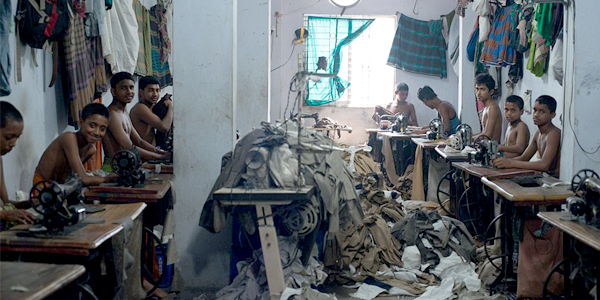
Many people believe that it was the government that put an end to child labour in Western Nations but in fact almost all the children in Britain were already in school when child labour was banned. Likewise, child labor laws in the US were passed only after around 90% of the child labor had been eliminated anyway. A large part of the push for these laws came from labour unions who wanted to increase wages by reducing competition from younger workers, and as the business community was not particularly dependent on child labour any more it had no reason to lead a counter charge.

It actually requires an advanced economy to ban children from working. Children had worked throughout all of history, long before the onset of the industrial revolution had them conspicuously running around factories. It was a given fact of life because every pair of hands was needed to provide for a family, so they worked on the farm. As soon as Western economies were rich enough that parents could provide for their children without sending them to work they sent them to school instead. In the mind-nineteenth century before there was any mandatory education in the UK, 95% of children in Great Britain already had at least 5 and often as many as 7 years of education.

Further empirical evidence was recently provided, all to sadly, in Bangladesh where they tried to ban child labour prematurely only to find (as Oxfam reported) that the results were horrific. The kids went into prostitution, destitution, begging, stealing and starvation.

Image result for child labour in factories

It appears that every society naturally takes children out the workplace when they are rich enough. It's not that parents, all throughout history, hated their children! They sent them to work because there was no viable alternative.

As world poverty continues to decline, things are going in the right direction. Child labour has declined by one third since 2000, from 246 million to 168 million children. It's not that we can do nothing in western nations to speed along this process either, in fact - with the political will - we can. Charity can help, but the primary necessity is to open up free trade with the poorest countries in the world. Removing trade barriers to buying their products would help lift millions out of poverty abroad and lower the cost of living for families on low incomes at home. The next step would be to use our influence to encourage those countries to open up their economies to foreign investment so that companies from all over the world would flood in, bringing technology, skills, and infrastructure while bidding up the price of wages. As adults are able to earn increasingly more they will be able to take their children out of work and into education where they belong.

A. S. 04-03-17

If you liked this article you may also learn from this related article on workplace safety.

Sunday, 12 March 2017

Why is the Capitalist Workplace so Authoritarian?

You are told that capital tyrannizes over labor. I do not deny that each one endeavors to draw the greatest possible advantage from his situation; but, in this sense, he realizes only that which is possible. Now, it is never more possible for capitalists to tyrannize over labor, than when they are scarce; for then it is they who make the law -- it is they who regulate the rate of sale. Never is this tyranny more impossible to them, than when they are abundant; for, in that case, it is labor which has the command.
- Frederic Bastiat, from Capital and Interest

A persistent criticism of capitalism as an ideology is that it is authoritarian by nature, and can only lead to tyrannical bosses ruling over dependent staff who are forced - by fear of poverty and starvation - to remain under their command. Certainly, if we take our example from the workplaces of today, most of them are hierarchical, and many of them pretty authoritarian. In extreme cases staff even need to ask permission to go to the bathroom. So there appears to be some demonstration to the thesis.

In reality there is nothing inherent in the system of free enterprise that necessitates hierarchy, and many businesses have been successfully run with decentralised structures. Ricardo Semler is an example of an entrepreneur who had such massive success running his business on a non-hierarchical model that he turned to teaching other capitalists all over the world to do the same. Nonetheless, crappy bosses who like to throw their weight around the shop or office are ten a penny, and since no one likes working under a dictatorship we really have to question why more egalitarian models not more common.

A market will tend to use the skills and propensities of the labour force within that market, because it is costly and time consuming to inculcate staff with new habits. For example, if a workplace can afford to hire experienced staff rather than train newbies they will often do so (especially where there is a high minimum wage.) Companies will sooner offer a raise to hold on to an employee with a good work ethic than take a risk on someone new. The fact is, human qualities are less malleable than other factors of production, and so it's usually going to be preferable to try and court the kind of employees you want around rather than try to foster whoever walks in the door into a new sort of character you like; especially considering people have their own proclivities and desires for their own personal character development, unlike machines. This is why most of the companies that run in cooperative or non-hierarchical structures begin with this idea as a primary value, and will tend to attract a certain kind of person who shares in the company vision and is competent to contribute to making it a reality. (Tim Kelley, an expert who currently helps companies adapt to what he calls "The New Paradigm in Business" states that as they do usually some number of employees flee, unable to adapt to the rights they are afforded, and responsibilities they must shoulder, under the changed system.)


Now am I saying that people are naturally slavish and therefore will tend towards hierarchy on a free market?

Not at all!

The average person who enters the workplace has been through 11-13 years of a mandatory education system which is highly authoritarian and hierarchical, and at the time in their life where their character is most impressionable and inclined to adapt to their circumstances. Their personalities have already been adapted to what was necessary for them thrive (or at least survive) under that system. Interestingly, the empirical evidence on how people best learn seems to suggest that a cooperative learning environment is far more productive than the isolated one that is the dish of the day at school. A crappy boss is not that unfamiliar in aspect from a crappy teacher, and it's hard to imagine that a population exposed to a long period of cooperative and mutually edifying education along the lines of the empirical evidence would be so tolerant of poor treatment from authority. If schools were to teach reasoning, social skills, emotional handing, conflict resolution, and other soft skills, far more people would have the skills to run organisations. start business enterprises, or create egalitarian ones.

The Marxist ideal of workers owning the means of production is perfectly compatible with free market capitalism, and there is no reason why there should not be more worker run cooperatives, communally owned business, and organisations with polycentric structures - other than the fact that currently, workers have no idea how to own the means of production or run a business. Partly because this requires different skills from what is required to complete their jobs from day to day, and partly because they are pre-conditions by years of hierarchical and authoritarian state education. If Marx was right and bosses provide no value - only skimming profit off the top - then workplaces without bosses will surely be more efficient and out-compete workplaces that shell out unnecessarily on paying them... but we will never know until we reform our education system.


Monday, 6 March 2017

What we can Learn about Economics from Scandinavia

Lately there has been a lot of talk online about how successful the Scandinavian countries are, and their success has been put down to Democratic Socialist policies like a large welfare state, high taxes, and high public spending. We are encouraged to view the example set by Denmark and Sweden as a model for our nation, and indeed there is a lot to learn about economics from the examples they have set. The nature of those lessons, however, may come to many as a surprise.

The Scandinavian countries are successful, but not for the reasons most people think they are. Each of them were already wealthy, egalitarian, equitable and successful nations long before they adopted any socialist policies whatsoever. For most of the 20th century they had more free market economies than the other countries in Europe; and because they largely stayed out the two World Wars they didn't have to waste huge sums of money on weapons, paying forces, and then replacing destroyed infrastructure in the aftermath.

In many ways the Scandinavian nations are still far more free market than the USA, Britain or France are. Their economies are far less regulated, they do not demand occupational licenses to practice in hundreds of professions that require them in some states of The US (in Finland you don't even need a license to practice law, yet people manage to hire competent lawyers and the cost is far lower), it's easier to start a business, to hire people - and fire them, and there is a lot less red tape and forms to fill in. We have certainly not been asked to heed the example of the Nordic countries in these respects, in fact these policies have been fervently opposed by the champions of The Scandinavian Model in Europe and America.

What's more, the Scandinavian countries were all far more successful before they adopted any socialist policies at all. Sweden enjoyed the highest per-capita income growth in the entire world from 1870 to 1950. It was from the 1970s onward that the Scandinavian nations began their experiments in Democratic Socialism and they remained somewhat successful during this period but less so than previously. These nations built their welfare states on the wealth created by free markets; and in so doing began to reverse their success.

All the Scandinavian countries are market economies. Danish Prime Minister Lars Løkke Rasmussen finally got so tired of media claims to the contrary that he exclaimed: "I would like to make one thing clear. Denmark is far from a socialist planned economy. Denmark is a market economy." Sweden, however, did attempt the experiment of centrally planning their economy like The Soviet Union - and with disastrous consequences.

Image result for sweden and denmark

The Case of Sweden

Socialism nearly destroyed Sweden. Swedish government spending rose from a relatively modest 20% of GDP to 50% between 1950 and 1975. Taxes, public debt, and the number of government employees all expanded massively. By the 1980s the destructive effects of the Swedish experiment with socialism was completely apparent to everyone and the government had to attempt to jump-start the economy with a massive expansion of credit which resulted in economic chaos: stock market and real estate bubbles burst, and interest rates were pushed up to 500 percent by the Swedish central bank. By 1990 Sweden had fallen from the fourth place in international income comparisons to twentieth. The decline led to a revolt against the socialist regime. More economically liberal politicians sharply reduced income tax rates, abolished currency controls, deregulated bank lending, privatized several government enterprises, deregulated the retail, telecommunications and airline industries; and implemented deep government spending cuts. Sweden began to recover and is doing a lot better now (as I am sure you have all heard.) But Sweden's recovery was all thanks to free markets - and no thanks to socialism.

Despite Sweden's economic recovery after the mid-1990s it is still poorer than Mississippi, the lowest income state in the USA. A 2009 study by the Swedish Economic Association discovered that the Swedish economy had failed to create any new jobs in the private sector on net between 1950 and 2005. The actual unemployment rate in Sweden is still probably at least three times higher than the official government figures because many Swedes live off government sick benefit and early retirement and are not counted. Thousands of Swedes are paid by the government to participate in "labor market political activities" whose only purpose is to reduce the official unemployment rate. To speed along their recovery, Sweden has been privitising portions of it's healthcare, social security, and education sectors in an effort to heal them up from the incentives entailed in public ownership which always destroys the quality of services while ratcheting up the cost of provision. Private health insurance is booming in Sweden because of the inevitable rationing, shortages and long wait times which their highly socialised healthcare system has lead to. It may seem shocking but in Sweden the government instructed doctors to "prioritize" patients according to their status as future taxpayers. The elderly are at the bottom of that list since they are mostly retired and paying relatively little in taxes while receiving large shares of government services. It's a distressingly callous approach that can only make cool sense from the perspective of planners seeking to minimize expenses out of the public purse which different interests are all angling for. (So much for socialism doing away with competition.)

Sweden's experiment with socialism also destroyed its history of innovation. The great companies that came out of Sweden such Lidl, H&M, Volvo, Saab,  AstraZeneca, Electrolux and Ericsson were all founded in Sweden's free market period. After 1970, the establishment of new firms dropped significantly and many enterprises now survive purely on government contracts out of the public pocket rather than by indication that they are producing what consumers actually want. It was during the free market period when Sweden produced Alfred Nobel, inventor of dynamite, Sven Wingquist inventor of the self-aligning ball bearing, Gustaf Dalen who founded the gas company AGA, and Baltazar von Platen, who invented the gas-absorption refrigerator.

The Case of Denmark

Denmark, like the other Scandinavian nations, may have a large welfare state and public sector, but it also has a far freer economy than the US and many other western nations as I have mentioned. Denmark is only one place below America on the Economic Freedom Index and was previously one rank above it. It is the most free market of all the Scandinavian countries.

This does not mean Denmark has found the right balance, having "the best of both worlds" though.

The large welfare state and heaving public sector has lead to poor social consequences in Denmark, not good ones. Only the nation's relatively free market economy has compensating for the fact, as evidenced by the fact that similar policies have worked nowhere outside of Scandinavian countries: neither in Greece, nor France, nor Spain nor anywhere else. This is partly down to the culture of a hard work ethic that the Scandinavian countries have inherited from their history which required their people to survive the harsh climate. Unfortunately, as generations wear on these welfarist policies are warping the very culture that allowed them to work in the short term.

In Denmark more than a quarter of the working-age population (aged 18-66) is on the government dole; for every one hundred persons employed full time, there are about sixty working age on welfare. In many regions less than half of people are employed.  More than 1.5 million people live full-time on taxpayer-funded handouts; the other 4 million people in the country have to pay a marginal income tax rate of 55.6% (on incomes of 55,000$ and above), a 25% national sales tax, and a wide variety of other taxes. Danish economist Per Henrik Hansen estimated taxes in Denmark approach 70% of income when all is considered. It has been claimed that Denmark has a more regressive tax system than the US where a far higher percentage of the taxes fall on the rich.

It might come to a surprise to many on the left who are championing the Danish model (such as Bernie Sanders and his supporters) to discover out that many Danish voters are turning out to vote for more free market politicians, and even the Democratic Socialist Party and those further to the left are in agreement that this is a problem. The classic liberal (free market) Venstre Party was in power in a coalition with the Conservative People's Party from 2001 to 2011 and was elected on its own in 2015. They have gained massive support in making free market reforms to the welfare state and are carrying them out right now! The platform has cross-party support.

Denmark is following the example that Sweden has been laying out since the 1990s. They are undergoing massive welfare reforms because they acknowledge their huge welfare state has created massive dependency and started to shift their culture away from personal responsibility and the ancient hard work ethic they had inherited. This calls the final death knell of empiricism for Socialism as an ideology - but how long before the left will heed the sound?

The Real Economic Lesson to be taken from Scandinavia

The real lesson to be taken from Scandinavia is that socialism wrecks economies and culture. It erodes the work ethic of a nation over generations and it takes a long time for free markets to restore them to prosperity afterwards. In Scandinavia, these policies have been a disaster only mitigated by having economies that are relatively unregulated compared to Europe and America.

New Zealand also flirted with all the policies that Bernie Sanders and supporters want to copy from Scandinavia up until the 1990s as well. It didn't do much for them at all. Since the 1990s New Zealand liberalised their economy and have been far more prosperous; Australia are following suit. Hong Kong was poorer than most countries in Africa and has become one of the richest countries in the world per head in a generation thanks to free market policies. Singapore has also proven itself to be a modern economic miracle. None of the countries which adopted socialism, nor any of the highly statist economies in the developing world, have had results that compare to those of Hong Kong or Singapore in the same period - and many of them remain devastated.

Free markets have helped the poor more than anyone else as they take people out of the most abject poverty and dependency at once, giving them control over their own destiny rather than having to rely on unreliable government to hand them alms. Markets also create the wealth necessary to look after those who remain poor, which is why most of the world's poor would rather be poor in a market economy than a highly socialised one with big government.

We can learn from Sweden and Denmark, yes. We can learn that we don't need miles of regulations or occupational licensing in up to 800 professions which drive up the price of services and stop young people from getting jobs. We can learn that when it's easier to start a business, hire and fire people, and to cut through red tape that brings prosperity. We can learn that high taxes and high spending stunt rather than grow an economy. We can learn that well-intentioned welfarist policies do more to foster dependency than to help the poor in the long term. That is the hardest pill to swallow.

What we can learn from Scandinavia is what Sweden and Denmark have already learned from their experiments with socialism. Hopefully we will learn from them without repeating their mistakes.


The main sources for this article are Debunking Utopia by Dr. Nima Sanandaji, and The Problem With Socialism by Tom DiLorenzo, you can get these two books if you want to learn more.

Sunday, 19 February 2017

The Excesses of Capitalism

The government - we are told - is necessary to protect us from the excesses of capitalism, and whatever gripes the average person might have about their elected officials, almost all of them can agree upon this.

But there's a problem with thinking the government can ever enter the economy as a fair referee rather than merely playing into the hands of whatever factions are most rich, powerful, and influential; because as soon as a corporations can make more money by angling for government favours than they can by serving customers that is exactly what they are going to do. Not necessarily because they are evil - but because it becomes the rational thing to do.

On an open market where only voluntary exchanges are permitted a business can only turn a profit by  providing something that the general buying public wants. No matter how greedy the corporate fat-cats may be, if they fail to 'cough up the goods' (and services) that people want they will go to the wall. [all puns intended] In this way the market forces otherwise self-interested people to apply their self-interest to social ends.

Critics may still complain about "tooth and nail" competition, but at least on a free market firms are competing to serve you better and win your disposable income. As soon as the government intervenes in the economy one thing is for sure: companies will compete for control over legislative bodies and the strings of the public purse. This is where the real "tooth and nail" begins.


According to The Sunlight Foundation for each of the 5.8 billion dollars spent by America's 200 most politically active corporations between 2007 and 2012 on federal lobbying and campaign contributions by they got $741 in return in kickbacks and benefits.

To pay for these kickbacks tax-payers were left $4.3 trillion dollars poorer - but that's not all.  $5.8 billion was spent in political gaming instead of invested in jobs and product development. These incentives drive companies to misallocate resources by making products that the general public doesn't want profitable, and products that they do unprofitable. In other words, the government has become the client of these corporations rather than their customers.

Firms might lobby or contribute to political campaigns to earn the exclusive right to provide government with their products. This will give them a huge advantage over competitors even if they are producing inferior or more expensive services. They can lobby for subsidies on their own goods or tariffs on cheaper or superior competitors.They can get the government to pass laws about who can and cannot operate in their sector.

Mandatory licenses, fees, reviews, huge stacks of forms, inspections, make it expensive for small start up businesses to enter the market and compete on an equal playing field. Companies spend millions of dollars on accountants, lawyers, actuaries and bureaucrats - not to mention tens of thousands of hours - to make sure they comply with the entangling webs of red tape, and make no mistake this harms the public. The costs are reflected in the price of products, and those are millions of dollars and tens of thousands of hours that are not being spent on more productive work that would benefit others. The rounds of "regulation" inflate corporate profits more and more, by cutting small firms out the market and directing sales to bigger firms who can afford specialists or whole departments to play the game.

By changing the incentive structure of the economy to favour profit through political influence over serving customers the government corrupts the market rather than moderating its excesses.