Perhaps the most difficult battle faced by the advocates of free markets it to convince people that Private Ownership of the Means of Production is not some special privilege conferring and advantage to "greedy capitalists" at the expense of everyone else, but that it serves a social function that is beneficial to all.
Private ownership makes the accumulated wealth of the entrepreneur a slave to the consumer - that is - to everyone else. We commonly understand private ownership to mean "for our own use," eg. the use of a toothbrush or a private residence, but in the case of private ownership, what is owned is almost exclusively for the use of others, placed at their service.
The capitalist keeps his wealth only to the extend he continues to use what he has accumulated in the interests of the masses, as they judge them, by churning out whichever goods and services they demand. To the extent he succeeds, his wealth will grow. This is the economy’s way of saying that he makes sure and wise decisions with the capital we have amassed as a society - not wasting them on projects that the public have no interest in paying for. To the extent he fails to do so, those factories, machines and companies that his investments represent will be sold on at knock-down rates to whoever thinks they can do a better job of managing them in the public interest. This allows for the constant re-allocation of capital to those who can best manage it, and engenders the accumulation of more capital over time. As the capital stock increase there is more wealth generation and technological advancement can be expected, and this will necessarily be largely led by the preferences of consumers, not those who actually "own" the capital.
The Austrian Economist Ludwig von Mises (1881-1973) authored his Magnum Opus Human Action (1949) in which he laid out his case for laissez-faire capitalism based on a rational investigation of human decision-making. Mises, and the work by extension, is often maligned for "rejecting the scientific method" but this criticism is based on a lack of understanding of Mises' arguments. Admittedly, while few of his critics have read the man himself, Human Action was not exactly written with a lay audience in mind and so the basis of his ideas cannot be easily grasped at a glance. In the interests of clarity, allow me to make his case for him in my own words.
Mises did indeed attest that the empirical method (positivism, or the scientific method) is not the correct methodology for reaching reliable conclusions on matters of economics. However, he did not reject the scientific method. He merely pointed out that the empirical method is ideal for matters of the natural sciences because when it comes to inanimate objects results are predictable. This is because the natural world is deterministic. Copper always melts at 1,085 °C. That which does not melt at 1,085 °C is not copper. Human beings, however, have differing values, tastes and information all of which strongly influence their decision making. Will a person buy a hamburger at half price? Certainly many more will than at full price, but for example I will not because I am a vegetarian, whereas some others may buy several times as many. It all depends on their individual ideas, expectations and preferences.
When it comes to matters of economics there is no way to set up an experiment and control for all factors as we can in a laboratory. We cannot, say, increase the minimum wage in one region to measure the effects on overall employment and compare it to the effects in another region where it is not increased, firstly because the implementation (or lack of it) in one region will also affect the behaviour of individuals in the other (some may move to take advantage of higher wages, others may stay to take advantage of cheaper labour costs.) Secondly because an economy is complicated, and thousands of other factors would also be at play in both regions which cannot possibly be controlled for. We cannot say (for example) that just because employment rose in one region after a minimum wage increase that this change was due to the minimum wage increase, only that it happened. Because we have no counter-factual there is no way to tell if employment would have increased even more if the minimum wage increase had not been enacted.
In light of this, Mises attested, a more suitable method of approaching economic questions would be necessary than the empirical one, based upon the foundation of certain axioms about human nature which could be reached by introspection (or thymology as Mises labelled it to distinguish from different uses of the term introspection.) In the interest of brevity and simplicity we only need to consider three of these; and I will explain why each should be uncontroversial.
The first is that humans act. This claim is hard to argue against because the very act of doing so would be to make a performative contradiction. The second is that when people act, they do so in order to substitute a state of affairs which they consider preferable for one they consider less preferable according to their own values. Again, I see no argument against it; if one is completely satisfied with their situation as it is they do not act but stop. Even the attempt at meditation or mindful acceptance of the present moment is based on the impulse to substitute a pleasant state of surrender to circumstances outside of ones control for a less pleasant state of resisting them. Finally, I add, that people respond to incentives. This axiomatically true because what people do not respond to can hardly be considered an incentive by the very definition of the word.
(To anticipate a potential objection I draw an analogy; a person might scold a dog for poor behaviour in the hope of stopping that behaviour, without realising they are reinforcing it because their dog enjoys negative attention better than no attention whatsoever. This does not mean that the master is failing to incentivise the dog; it just so happens that he is not incentivising the dog to do what he thinks he is.)
An acceptance of these three axioms (for which their is unlikely to be any disproof) reveals that it is incentives which guide economic decision making among individuals. This we all accept, if not in our conscious philosophy then by our actions. To illustrate with our earlier example of the half-price hamburger, the business owner offers this deal in the hope of selling more burgers by creating knowledge of his product. A person buying the burger at the lower price incentivises burger joints to offer burgers at a lower rate. (One might argue that not everyone will respond to incentives, illustrated by the fact that I will not buy the burger because I'm a vegetarian - but in fact in my case the incentive is simply not great enough to suit my values; were the price of the burger was -$10 [minus ten dollars] I might take the money and give the burger away to a homeless person.) Our policy-makers are often led by their unconscious acceptance of these axioms, for example, they may put a tax on alcohol do discourage its consumption, while placing a subsidy on a solar panel to encourage its use. These are not policies guided by the empirical method which is better suited to the natural sciences, but by the aprioristic understanding that humans act, and in their actions they respond to incentives. That is the method, named praxeology, which Ludwig von Mises advocated.
It takes a long time to make changes in public institutions. You have to get enough of the public interested to make it an issue, you might need to get into the media which itself is a hell of a job and even if you do rouse some attention the best most people can hope for is to vote, and they need to vote for one of the package deals on offer. Even if your reform is quite modest and sensible and its benefit is uncontroversial, it may be adopted by a party who have several other ideas on your mind that you disagree with. There is another path, and that is to get a small concentrated number of people who already have a lot of influence to get on board with your ideal and push it through as a bill but even then the matter is not settled; it needs to go through levels of bureaucrats, managers and administrators before the change enters into the system at large and even then many employees will resist the change because they resent being told what to do by central planners.
If we take the example of our education system there has been no small amount of evidence on how to improve it since the 60s when a wave of intellectual idealists from the flower power generation began discussing how "getting things right" when it came to government could change the world. Some of this data has been around for over fifty years, some of it is still coming out. Have these reforms not been adopted for a lack of political will? Yes to a degree but also because of the insurmountable obstacles to mustering the political will. The largest is the simple fact that most people are more comfortable doing what they have always done than doing something new. Doing things differently is anxiety-provoking and it is very irritating to be told or forced to do it by an authority figure, even one who has the evidence on their side, when you think, "Well I have been on the front lines doing it this way my whole life, this is how I was taught to do it in four years of university I think you'll find I know how its done thank you very much you government busy body."
One of the reasons why markets are so important, and why products adapt to user preferences far quicker is because only one person needs to be bothered enough to accept a new innovation in order to force all the other providers in their sector to step up and do a better job. They can do that by matching the innovation, by implementing one that is equally valuable, by providing an inferior service but at a lower price, or in numerous other ways - but the fact is they have to step up and serve customers or on average over time they will be out of business. This means people don't even need to all be receiving the same service or a one-size-fits-all but it does mean that services that are way behind the times will fall out of favour. Public institutions are not under the same pressure to adapt to the times because people cannot divest from them easily since they are funded through the tax system rather than voluntary contributions that can be withdrawn if the service is poor, and also because they have a relative monopoly on the provision of services in their sector which means that people can't compare their performance to those of competitors who are trying different approaches which may have their own advantages or drawbacks.
People need to have a choice when it comes to services if the quality of services is to increase and not stagnate or fall behind the times. This is not because "ruthless tooth n' nail capitalist competition drives innovation" but simply without the petri-dish of trial and error which is a multitude of entrepreneurs with different information and ideas trying to sell them to a skeptical public there is really no way of discovering the best way of doing things. No one has all the answers, but many people have some of the answers, and by constantly turning over the soil society learns to combine the best ideas and discard the worst ones over time. The soil of government turns very very slowly and that's why innovation in the private sector continues (despite various government restrictions on who can innovate) while public institutions stagnate and become more expensive each year while providing poorer standards to the people.
What is common to many is least taken care of, for all men have
greater regard for what is their own than what they possess in
common with others.
—Aristotle
The idea of aspects of the natural world being "privately owned" strikes as rather crass to most people and perhaps with some good reason as it brings to mind a vision of heartless mercenaries sacrificing nature to the pursuit of profit. Industrialists, we are led to believe, can only possibly view nature as a means to and end rather than an end in itself, and in doing so reduce it to a disposable commodity.
However, this prevailing assessment does not take into the equation the fact that true ownership is attended by responsibilities to which an owner must be held accountable. Where rights entail responsibilities (as they have in the past under common law), and these responsibilities are enforced, the claim to a property will serve naturally as an incentive to conserve that property. In effect owners will become custodians.*
* (The words "ownership" and "property" have perhaps simply taken on negative connotations synonymous with exploitation for various historical reasons, and so it is essential in order to dialogue on these topics that we make explicit the fact that our definition of ownership is one that not only entails property rights but property responsibilities.)
Most people presume that government must fulfill the role of protecting the natural world, but this arrangement throws up some rather dubious incentives. When governments write policy documents
about rivers, lets say, they tend to be for the purpose of delineating who is allowed to exploit the river, on
what terms, and in what measure. Special favours can always be handed out to
cronies or campaign contributors; to “stimulate local business”; or for any other political ends that might attract short term support for office-holders regardless of the long term consequences. The rights to log a forest can be sold off to the highest bidder and the tax payer can be left with the burden of restoring it to health.
Where the river (or forest) has particular ownership (rather than general ownership) it is fully in the interests of the owner (or owners) to
keep it permanently in pristine condition for at least three reasons. (Owners also need not necessarily be private companies or individuals, but also charities, trusts, worker or consumer cooperatives, NGOs, or any form of organisation - that notwithstanding, even if held by a private corporations these same incentives will apply.)
The first is in order to retain (or even
increase) the resale value of the river. The better condition the river is kept
in the higher its value will become; and even if the proprietor has no plans of
ever selling the river they still have no interest in losing whatever outlay
they have sunk into acquiring it in the first place. As such, a particular
owner has the maximum incentive to protect against the river being polluted and
to take whatever action is necessary to prevent it from being polluted. As a
rightful owner they have the legal and moral right to take action
against anyone who pollutes the river because the polluter has damaged the value of their
property. As it is not under general ownership where everyone has as much right to abuse it as anyone else does, the proprietor's interests are aligned with the interests of the natural world, thus he is risen to the level of a custodian.
Secondly, a well-kept resource is renewable
- it can turn a profit indefinitely. A badly-kept resource cannot. If a river
is ill-kept the return on the investment for acquiring that resource will soon
dry up (no pun intended.) As such an owner who does not know how to take care
of the river will stand to gain more from passing it on to someone who does
than from keeping it. A superior custodian will be able to pay more to acquire
the river since they know how to put it to good use indefinitely. The best experts in keeping a river running cleanly stand to gain the most from owning them and therefore will be able to pay more to acquire them than those who lack that expertise. In this way those who are the best custodians of resources will end up with them in their care on average over time.(The same would go for forests, fisheries, or grazing lands; where altruism is not enough to motivate environmental concern, rational self-interest will usually do the trick.)
Thirdly, if the river is not properly kept
and becomes polluted, this is inevitably going to have negative effects on
neighbouring lands, industries and settlements as the pollution is carried by
the river onto other people’s property. At this point, as the last line of
defence against irresponsible misuse and management of the river is the threat of litigation against the owner for his negligent and harmful management of his property. Where others have suffered harm, loss of health, or damage to their own property, a particular owner should be forced to pay damages and reparations to restore them to their original condition. They can lose their personal property and have to forfeit ownership of the river if they are found guilty of causing damages. When the government causes environmental catastrophes, as they often have, they can only be tried in their own courts, and even so the property of decision-makers is never at stake - even if found guilty of wrong-doing, the public purse will eventually foot the bill. As officials in public institutions tend to have a diffusion of responsibility it is hard to hold particular culprits to account for their actions, rarely will a department be shut down or replaced where abuses occur as they are presumed essential even having "made mistakes". Often state officials have sovereign immunity, occasionally one
or two resignations will be tendered as a token gesture, but the machinery of the institution remains as well as the lack of moral hazard which set it up to fail.
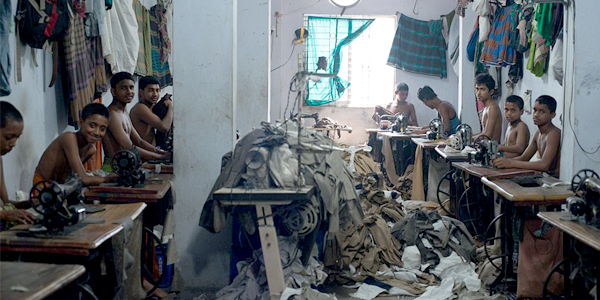
Many people believe that it was the government that put an end to child labour in Western Nations but in fact almost all the children in Britain were already in school when child labour was banned. Likewise, child labor laws in the US were passed only after around 90% of the child labor had been eliminated anyway. A large part of the push for these laws came from labour unions who wanted to increase wages by reducing competition from younger workers, and as the business community was not particularly dependent on child labour any more it had no reason to lead a counter charge.
It actually requires an advanced economy to ban children from working. Children had worked throughout all of history, long before the onset of the industrial revolution had them conspicuously running around factories. It was a given fact of life because every pair of hands was needed to provide for a family, so they worked on the farm. As soon as Western economies were rich enough that parents could provide for their children without sending them to work they sent them to school instead. In the mind-nineteenth century before there was any mandatory education in the UK, 95% of children in Great Britain already had at least 5 and often as many as 7 years of education.
Further empirical evidence was recently provided, all to sadly, in Bangladesh where they tried to ban child labour prematurely only to find (as Oxfam reported) that the results were horrific. The kids went into prostitution, destitution, begging, stealing and starvation.
It appears that every society naturally takes children out the workplace when they are rich enough. It's not that parents, all throughout history, hated their children! They sent them to work because there was no viable alternative.
As world poverty continues to decline, things are going in the right direction. Child labour has declined by one third since 2000, from 246 million to 168 million children. It's not that we can do nothing in western nations to speed along this process either, in fact - with the political will - we can. Charity can help, but the primary necessity is to open up free trade with the poorest countries in the world. Removing trade barriers to buying their products would help lift millions out of poverty abroad and lower the cost of living for families on low incomes at home. The next step would be to use our influence to encourage those countries to open up their economies to foreign investment so that companies from all over the world would flood in, bringing technology, skills, and infrastructure while bidding up the price of wages. As adults are able to earn increasingly more they will be able to take their children out of work and into education where they belong.
Lately there has been a lot of talk online about how successful the Scandinavian countries are, and their success has been put down to Democratic Socialist policies like a large welfare state, high taxes, and high public spending. We are encouraged to view the example set by Denmark and Sweden as a model for our nation, and indeed there is a lot to learn about economics from the examples they have set. The nature of those lessons, however, may come to many as a surprise.
The Scandinavian countries are successful, but not for the reasons most people think they are. Each of them were already wealthy, egalitarian, equitable and successful nations long before they adopted any socialist policies whatsoever. For most of the 20th century they had more free market economies than the other countries in Europe; and because they largely stayed out the two World Wars they didn't have to waste huge sums of money on weapons, paying forces, and then replacing destroyed infrastructure in the aftermath.
In many ways the Scandinavian nations are still far more free market than the USA, Britain or France are. Their economies are far less regulated, they do not demand occupational licenses to practice in hundreds of professions that require them in some states of The US (in Finland you don't even need a license to practice law, yet people manage to hire competent lawyers and the cost is far lower), it's easier to start a business, to hire people - and fire them, and there is a lot less red tape and forms to fill in. We have certainly not been asked to heed the example of the Nordic countries in these respects, in fact these policies have been fervently opposed by the champions of The Scandinavian Model in Europe and America.
What's more, the Scandinavian countries were all far more successful before they adopted any socialist policies at all. Sweden enjoyed the highest per-capita income growth in the entire world from 1870 to 1950. It was from the 1970s onward that the Scandinavian nations began their experiments in Democratic Socialism and they remained somewhat successful during this period but less so than previously. These nations built their welfare states on the wealth created by free markets; and in so doing began to reverse their success.
All the Scandinavian countries are market economies. Danish Prime Minister Lars Løkke Rasmussen finally got so tired of media claims to the contrary that he exclaimed: "I would like to make one thing clear. Denmark is far from a socialist planned economy. Denmark is a market economy." Sweden, however, did attempt the experiment of centrally planning their economy like The Soviet Union - and with disastrous consequences.
The Case of Sweden
Socialism nearly destroyed Sweden. Swedish government spending rose from a relatively modest 20% of GDP to 50% between 1950 and 1975. Taxes, public debt, and the number of government employees all expanded massively. By the 1980s the destructive effects of the Swedish experiment with socialism was completely apparent to everyone and the government had to attempt to jump-start the economy with a massive expansion of credit which resulted in economic chaos: stock market and real estate bubbles burst, and interest rates were pushed up to 500 percent by the Swedish central bank. By 1990 Sweden had fallen from the fourth place in international income comparisons to twentieth. The decline led to a revolt against the socialist regime. More economically liberal politicians sharply reduced income tax rates, abolished currency controls, deregulated bank lending, privatized several government enterprises, deregulated the retail, telecommunications and airline industries; and implemented deep government spending cuts. Sweden began to recover and is doing a lot better now (as I am sure you have all heard.) But Sweden's recovery was all thanks to free markets - and no thanks to socialism.
Despite Sweden's economic recovery after the mid-1990s it is still poorer than Mississippi, the lowest income state in the USA. A 2009 study by the Swedish Economic Association discovered that the Swedish economy had failed to create any new jobs in the private sector on net between 1950 and 2005. The actual unemployment rate in Sweden is still probably at least three times higher than the official government figures because many Swedes live off government sick benefit and early retirement and are not counted. Thousands of Swedes are paid by the government to participate in "labor market political activities" whose only purpose is to reduce the official unemployment rate. To speed along their recovery, Sweden has been privitising portions of it's healthcare, social security, and education sectors in an effort to heal them up from the incentives entailed in public ownership which always destroys the quality of services while ratcheting up the cost of provision. Private health insurance is booming in Sweden because of the inevitable rationing, shortages and long wait times which their highly socialised healthcare system has lead to. It may seem shocking but in Sweden the government instructed doctors to "prioritize" patients according to their status as future taxpayers. The elderly are at the bottom of that list since they are mostly retired and paying relatively little in taxes while receiving large shares of government services. It's a distressingly callous approach that can only make cool sense from the perspective of planners seeking to minimize expenses out of the public purse which different interests are all angling for. (So much for socialism doing away with competition.)
Sweden's experiment with socialism also destroyed its history of innovation. The great companies that came out of Sweden such Lidl, H&M, Volvo, Saab, AstraZeneca, Electrolux and Ericsson were all founded in Sweden's free market period. After 1970, the establishment of new firms dropped significantly and many enterprises now survive purely on government contracts out of the public pocket rather than by indication that they are producing what consumers actually want. It was during the free market period when Sweden produced Alfred Nobel, inventor of dynamite, Sven Wingquist inventor of the self-aligning ball bearing, Gustaf Dalen who founded the gas company AGA, and Baltazar von Platen, who invented the gas-absorption refrigerator.
The Case of Denmark
Denmark, like the other Scandinavian nations, may have a large welfare state and public sector, but it also has a far freer economy than the US and many other western nations as I have mentioned. Denmark is only one place below America on the Economic Freedom Index and was previously one rank above it. It is the most free market of all the Scandinavian countries.
This does not mean Denmark has found the right balance, having "the best of both worlds" though.
The large welfare state and heaving public sector has lead to poor social consequences in Denmark, not good ones. Only the nation's relatively free market economy has compensating for the fact, as evidenced by the fact that similar policies have worked nowhere outside of Scandinavian countries: neither in Greece, nor France, nor Spain nor anywhere else. This is partly down to the culture of a hard work ethic that the Scandinavian countries have inherited from their history which required their people to survive the harsh climate. Unfortunately, as generations wear on these welfarist policies are warping the very culture that allowed them to work in the short term.
In Denmark more than a quarter of the working-age population (aged 18-66) is on the government dole; for every one hundred persons employed full time, there are about sixty working age on welfare. In many regions less than half of people are employed. More than 1.5 million people live full-time on taxpayer-funded handouts; the other 4 million people in the country have to pay a marginal income tax rate of 55.6% (on incomes of 55,000$ and above), a 25% national sales tax, and a wide variety of other taxes. Danish economist Per Henrik Hansen estimated taxes in Denmark approach 70% of income when all is considered. It has been claimed that Denmark has a more regressive tax system than the US where a far higher percentage of the taxes fall on the rich.
It might come to a surprise to many on the left who are championing the Danish model (such as Bernie Sanders and his supporters) to discover out that many Danish voters are turning out to vote for more free market politicians, and even the Democratic Socialist Party and those further to the left are in agreement that this is a problem. The classic liberal (free market) Venstre Party was in power in a coalition with the Conservative People's Party from 2001 to 2011 and was elected on its own in 2015. They have gained massive support in making free market reforms to the welfare state and are carrying them out right now! The platform has cross-party support.
Denmark is following the example that Sweden has been laying out since the 1990s. They are undergoing massive welfare reforms because they acknowledge their huge welfare state has created massive dependency and started to shift their culture away from personal responsibility and the ancient hard work ethic they had inherited. This calls the final death knell of empiricism for Socialism as an ideology - but how long before the left will heed the sound?
The Real Economic Lesson to be taken from Scandinavia
The real lesson to be taken from Scandinavia is that socialism wrecks economies and culture. It erodes the work ethic of a nation over generations and it takes a long time for free markets to restore them to prosperity afterwards. In Scandinavia, these policies have been a disaster only mitigated by having economies that are relatively unregulated compared to Europe and America.
New Zealand also flirted with all the policies that Bernie Sanders and supporters want to copy from Scandinavia up until the 1990s as well. It didn't do much for them at all. Since the 1990s New Zealand liberalised their economy and have been far more prosperous; Australia are following suit. Hong Kong was poorer than most countries in Africa and has become one of the richest countries in the world per head in a generation thanks to free market policies. Singapore has also proven itself to be a modern economic miracle. None of the countries which adopted socialism, nor any of the highly statist economies in the developing world, have had results that compare to those of Hong Kong or Singapore in the same period - and many of them remain devastated.
Free markets have helped the poor more than anyone else as they take people out of the most abject poverty and dependency at once, giving them control over their own destiny rather than having to rely on unreliable government to hand them alms. Markets also create the wealth necessary to look after those who remain poor, which is why most of the world's poor would rather be poor in a market economy than a highly socialised one with big government.
We can learn from Sweden and Denmark, yes. We can learn that we don't need miles of regulations or occupational licensing in up to 800 professions which drive up the price of services and stop young people from getting jobs. We can learn that when it's easier to start a business, hire and fire people, and to cut through red tape that brings prosperity. We can learn that high taxes and high spending stunt rather than grow an economy. We can learn that well-intentioned welfarist policies do more to foster dependency than to help the poor in the long term. That is the hardest pill to swallow.
What we can learn from Scandinavia is what Sweden and Denmark have already learned from their experiments with socialism. Hopefully we will learn from them without repeating their mistakes.
The main sources for this article are Debunking Utopia by Dr. Nima Sanandaji, and The Problem With Socialism by Tom DiLorenzo, you can get these two books if you want to learn more.
The government - we are told - is necessary to protect us from the excesses of capitalism,and whatever gripes the average person might have about their elected officials, almost all of them can agree upon this.
But there's a problem with thinking the government can ever enter the economy as a fair referee rather than merely playing into the hands of whatever factions are most rich, powerful, and influential; because as soon as a corporations can make more money by angling for government favours than they can by serving customers that is exactly what they are going to do. Not necessarily because they are evil - but because it becomes the rational thing to do.
On an open market where only voluntary exchanges are permitted a business can only turn a profit by providing something that the general buying public wants. No matter how greedy the corporate fat-cats may be, if they fail to 'cough up the goods' (and services) that people want they will go to the wall. [all puns intended] In this way the market forces otherwise self-interested people to apply their self-interest to social ends.
Critics may still complain about "tooth and nail" competition, but at least on a free market firms are competing to serve you better and win your disposable income. As soon as the government intervenes in the economy one thing is for sure: companies will compete for control over legislative bodies and the strings of the public purse. This is where the real "tooth and nail" begins.
According to The Sunlight Foundation for each of the 5.8 billion dollars spent by America's 200 most politically active corporations between 2007 and 2012 on federal lobbying and campaign contributions by they got $741 in return in kickbacks and benefits.
To pay for these kickbacks tax-payers were left $4.3 trillion dollars poorer - but that's not all. $5.8 billion was spent in political gaming instead of invested in jobs and product development. These incentives drive companies to misallocate resources by making products that the general public doesn't want profitable, and products that they do unprofitable. In other words, the government has become the client of these corporations rather than their customers.
Firms might lobby or contribute to political campaigns to earn the exclusive right to provide government with their products. This will give them a huge advantage over competitors even if they are producing inferior or more expensive services. They can lobby for subsidies on their own goods or tariffs on cheaper or superior competitors.They can get the government to pass laws about who can and cannot operate in their sector. Mandatory licenses, fees, reviews, huge stacks of forms, inspections, make it expensive for small start up businesses to enter the market and compete on an equal playing field. Companies spend millions of dollars on accountants, lawyers, actuaries and bureaucrats - not to mention tens of thousands of hours - to make sure they comply with the entangling webs of red tape, and make no mistake this harms the public. The costs are reflected in the price of products, and those are millions of dollars and tens of thousands of hours that are not being spent on more productive work that would benefit others. The rounds of "regulation" inflate corporate profits more and more, by cutting small firms out the market and directing sales to bigger firms who can afford specialists or whole departments to play the game.
By changing the incentive structure of the economy to favour profit through political influence over serving customers the government corrupts the market rather than moderating its excesses.
One of the most fundamental things about
economics which most people who are passionate about politics do not understand
is that the economy is not just like a chess board where you can move one
piece with deterministic and predictable consequences. On the contrary, an
economy is an intricate fabric of interrelated institutions and actors all of
whom act relative to one another. Any one move creates a cascade of domino
effects. If the price of milk changes dramatically then orange juice sales
might be affected - you just never know.
The role of a good economist is to be able to
follow the threads of consequences liable to result from a policy so that the
short-sightedness of policy-makers (and would-be policy makers) seeking some
immediate and favourable end does not result in a multitude of negative
unintended consequences into the bargain. (Clearly this goes to the very heart of why I called this blog Seeing the Unseen.)
Many policies can end up having the opposite
effect from what is intended.
For example, supposing some of the fancy hair
salons are getting irked because cheap salons are popping up everywhere and
giving people poor quality haircuts. They're giving the whole industry a bad
name. So a coalition goes to the government to pass standards and licensing
laws in the hairdressing industry (in some places you currently need a license
to braid hair.) That's going to improve the quality of haircut going around,
right?
Not necessarily. Now all the hair salons have to
send their employees to college for two years to get a license, and when they
graduate they are expecting much higher pay because they just sunk two years
into an education which they didn't see any money during. Some of them went out drinking with their student loans, the rest still had rent to pay, and most of them accumulated debts. What's more the salons need
to consult special accountants or lawyers to make sure they can prove
that they are adhering to the new regulations - even the ones who are way ahead
of the law and already providing far better conditions and services than what has been mandated. These professionals often charge upwards of $100 an hour. Many
independent salons simply can't afford the increase in costs and have to close
down entirely; others have to jack prices up to pay for the extra costs of
compliance and staff. In some areas only one salon is left standing and since
people have less choice they can afford to let standards slip.
With the price of haircuts going up lots of
people decide to go without. They cut their friends hair at home, badly. Or
they get pretty good at it and don't have to go to the hairdressers any more
but take longer to prepare for going out and miss out on the chat and gossip.
What's more everyone who does still go for a professional haircut has less left
over to spend on a manicure or something else nice, so other industries also
suffer. You can add to that the marginal increase in taxes to pay the civil
servants in the new public body which acts as a regulator for the hairdressing
industry. Now those people are involved in busy work instead of making
commodities and providing services that improve people’s living standards in
real terms and rather than paying into the public purse they are a net drain on
it.
I choose a relatively trivial example (no
disrespect ladies) because it's perfectly illustrative of how a seemingly
simple and innocuous policy suggestion - mandatory hairdressing licenses - can
generate more than its fair share of consequences. An alternative is for a
series of private watchdogs to certify only hairdressers that meet their
standards and give the ones who do an official number and sticker to put in
their window; because they are competing they have to keep the costs of
certification to a minimum (no $100 an hour fees), and people who are not
fussed to pay extra for a certified cut can take a risk on somewhere cheaper or
go by word of mouth.
Occupational licensing makes for an interesting
case because it is almost ubiquitously considered in the public interest and
even necessary to prevent catastrophe, and yet there is actually zero evidence that it leads to a
higher quality of service provision. Zilch!
Usually all it means is that instead of taking
budget options people with fewer means have to go without any services
at all! This is a topic to which we will have to return to in more detail,
check back! :)
The impulse of the state is not to solve social problems but to create as many dependents as possible, including a bloated public sector full of Marxists and as many people as possible on welfare who they can then turn on whenever they need someone to blame for their own excesses. That is why the size of government grew massively even under so-called free market Thatcher who made hand-outs to big business and sent military spending through the roof. Every dependent will make justifications for the existence of the state as a necessary evil and attack the free market which takes people out of poverty. The natural state of everyone who is born is poverty; all wealth was created by individuals for themselves or to trade with other people for something which they agree upon in a voluntary exchange. Voluntary exchange enriches both parties as each trader values what they get from the trade more than what they part with, and so trade takes people out of poverty not government. Government retards this organic process by putting restrictions on who can trade with whom under what circumstances and passing an ever increasing litany of laws that make it impossible for poor people to find employment so that many people will have to compete for few jobs and accept whatever conditions are given to them. This creates dependency upon which government survives. To complete the trick the government directs the attention of the oppressed to their crappy bosses rather than the conditions which created the crappy bosses, those state interventions which restricted the number of jobs.
The government cannot solve social problems because the government lives on social problems. If tomorrow everyone woke up in a world without crime then what need for a large police force? In a world with little poverty and many routes out of poverty, then what need for huge welfare programs and government bureaucrats to administer them? If there wasn't a shortage of medical staff pushing the price of medical care through the roof then who would tolerate a million people on NHS waiting lists? If we didn't fear any enemies in the Middle East or Russia what need for a large military and curtailments on civil liberties? Who would need government without social problems? Who would want it? It is in the interests of government to perpetuate social problems internally and create enemies abroad, then blame all of this on capitalism and the free market so the average individual will call on government to save them.
If we want to solve social problems we need to dig in with our own hands and start helping. We can volunteer, create organisations, or support organisations that are already doing good work.
It's widely believed that it was the intervention of government and labour unions which is responsible for improving safety conditions in factories and other industries, but that is not accurate. This graph demonstrates that workplace fatalities were already very much on the decline before OSHA (the Occupational Safety and Health Administration) was even founded in America:
Tom DiLorenzo wrote in Capitalism "Enriches the Working Class":
"Capitalism has also made the workplace safer. In relatively “dangerous,” strenuous, or dirty jobs, employers must pay a wage premium because relatively few people want such jobs. Economists call this a “compensating difference.” The man who rides on the outside of the garbage truck at daybreak, in the winter, in the northern states, does so because he makes a very good salary – better than any of his alternatives. Profit-seeking capitalists have always understood that they need to pay more to get people to perform risky or dangerous work. Therefore, they have also always understood that there is profit in making the work place safer. A safer workplace requires a lesser compensating difference. Lower wages paid to the workers can mean higher profits for the capitalist. Thus, the American workplace had become safer and safer for generations before the Occupational Safety and Health Administration (OSHA) was established in the 1970s. Indeed, OSHA has often reduced workplace safety with its clumsy and stupid workplace rules enforced by government bureaucrats with no knowledge of the specific work that they are regulating. "
The government can intervene to bring about workplace safety faster, but this will not be without any negative consequences to their employees. The dictates of government will displace private efforts. Once the state declares that they are in charge of safety businesspersons are going to leave it up to the experts. Rather than investigating what investments will improve safety most effectively, they will spend lots of money on whatever the central planners at OSHA dictate; and if these are harebrained ideas these resources will be misallocated and go completely to waste.
Do you really think those workplace safety advancements were paid for out of the factory owners pockets? Well they weren't. They were paid for out of the workers pockets. Employers have a certain amount to budget for labour and it makes zero difference to them whatsoever if that gets spent on wages, health and safety, health insurance, company cars or anything else the employees might want to receive as payment in kind. On a free market employees will tend to get roughly the package of spending on them that they want because if a workplace is too dangerous they can go somewhere across the road that pays them less and spends more on safety. As recent empirical evidence of this the economist Benjamin Powell actually went to factories in the poorest countries in the world and asked them if they would like better health and safety, shorter hours, and a long list other benefits; overwhelmingly they said yes to everything - who wouldn't? - Unless those benefits meant less pay. In which case they declined them all. This is why workplace safety was shoddy when people were poor, but improved as people got richer. When you're broke you'd rather your employer spent the money on your wage than health and safety. However, as your standard of living increases safety at work becomes more of a priority so your expectations on your employer go up. This would all arranged voluntarily even without legislation from government. In fact it was! If employers were responsible for injuries or deaths they may have been sued for damage in common law courts for having caused harm or loss.
The best defense of workers rights is having the largest choice of employers available as possible. All of the things which the left think will help workers reduces their number of options by making employing people profitable to less employers and therefore reducing the options of workers rather than increasing them. The consequence of having less jobs to go around is that low skilled workers have to accept whatever is going on whatever terms are offered to them, and often tolerate crappy bosses. On a free market, some people might have to tolerate a less well paid job in the short term, but if they have a bad boss or do not like the safety conditions at work they can easily walk into a job elsewhere because anyone can employ them. This is a system of spiritual advancement. A wise individual can choose the job that will teach them the most skills, then move to the next one, and onto the next, and keep on moving from job to job gathering skills until they can get a management position, start their own business, or become a staff trainer or consultant themselves. It affords the maximum opportunity for class mobility. Each well-intentioned socialist policy: the minimum wage, maximum regulations, workplace safety, - takes a big slice out of the pie of possible jobs available and reduces the prospects of the poor to become wealthy in the long term.
For all its faults one thing the Government does is protect the environment from profit-seeking corporations, right? Without government to stop them,corporations would just lay waste to the environment in pursuit of the bottom line. That's the popular view.
An investigation of history might yield some surprises.
There was a time where the courts ruled by common law and were held separately and above the government. When an industrialist polluted a stream or the air in a way that caused physical or financial harm to his neighbors, the courts would force them to pay reparations and a penalty. This in itself did a pretty good job of deterring people from polluting,
Until the latter part of the nineteenth century this form of law, where the right of every individual were considered, was successful, it stated that if you caused harm or law to another person it was your duty to restore them to their original condition and compensate them. Then, as documented by Morton J. Horowitz in his two-volume treatise named The Transformation of American Law, the legal system began to change. Industrialists went to the government to have it changed.to a more collectivist philosophy where lawyers and law makers became increasingly concerned with what was termed “the common good."
"Under the individualist view the law should protect everyone's right to life, liberty and property – which includes the right not to have your body or property damaged by the pollution of others. The new legal system however argued that no individual or group of individuals should stand in the way of the economic progress of the entire community. Therefore a few victims of pollution should not interfere with economic development prospects that would benefit "The greater good.”" (Tom Dilorenzo)
The government came back and told the people that while the factories were polluting and there would be some victims the industry served 'the common good' and therefore people just had to accept the pollution as a fact of life 'in the greater interests of society as a whole' and all those high minded phrases the left have since appropriated. When you consider history you will see that it is government that made the way for industry inflicting damage on others.
We live in a mixed economy where the state is responsible for almost 50% of the spending in the economy in the UK, and 19% of the population is employed in the public sector. The state controls the money supply, sets the interest rates, and is responsible for regulating each and every facet of the economy from the provision of energy, to the conditions under which someone can employ another person. The state runs the schools, and a great deal of the hospitals. It decides when a road is to be built, and when we are to build a railway. It hands subsidies to tobacco farmers, then taxes the tobacco we smoke. It hands welfare to the wealthy in the form of contracts and preferential legislation, and to the poor in the form of entitlements, free services and food stamps
.
There is no part of the society left untouched by the machinations of the state – whether rightly or wrongly – and yet we are told again and again that this is capitalism. The free market at work.
What's more whatever goes right in the economy: the government is responsible for, whatever goes wrong in the economy: capitalism is to blame.
This line of reasoning (if we acquiesce to calling it one) is at its most flagrant when people on the far-left attempt, shamelessly, to redefine the nature of regimes which were heretofore ubiquitously considered and described as communist – The Soviet Union, China, Cuba – as not socialistic, but in fact examples of “state-capitalism.” The underlying message is clear: Whatever we don’t want is capitalism, and whatever we want do want is socialism. And so it necessarily follows that no socialistic regime can ever really be bad, because if is woefully inefficient, or it yields tremendous abuses, or the people starve, we simply redefine it as some form of capitalistic one. What is more the philosophical doctrine of socialism narrowly escapes condemnation like a slippery frog.
By this trick the socialistic ideology becomes an unfalsifiable doctrine which is immune to any rational discourse or examination. An idee fixe. Whenever it fails in reality, it is “not real socialism.” Equally is it immune to the puncturing incision of factual evidence such as the inconvenient truth that throughout history the nations that are the most free economically thrive, while the nations that are the least free economically flounder. Socialism is good qua definition and thus consequently can never be abandoned as a doctrinal goal in light of the facts.
"The More of the Economy they Socialise, The More they Complain:
Recently, after quizzing me on how x, y and z would be achieved without Government intervention, a socialist told me that "All of the libertarians politics is based on "if and but" no real solid plan."
I said I can see why it might look like that but it's not really accurate. On reflection maybe he's right.
People often ask how various services would be provided if not for government, and often the best answer I can provide sounds something along the lines of, "perhaps it would be done like this, or like that, but it just depends on what people want; these are just my suggestions, experts would probably come up with better ideas, those would get tried out, improved upon, and the best ideas would win out over time."
That's admittedly, not a very solid plan. But we are really skeptical about people with "solid plans."
Because if you have a solid plan you basically think you are a genius and can run the whole society so long as your plan gets implemented. That you have better ideas than the entire combined intelligence of society working to test potential solutions on the small scale and through trial and error, rather than complete a priori calculation, allow the best ideas to be optimised and prevail.
We actually believe that the community as a whole has far better methods for reaching good ideas than anyone with a "solid plan" can ever achieve. We see the progress of society as working like a sieve for good ideas, bad ideas get weeded out and good ideas get more widely adopted and rolled out and improved upon.
Solid plans, on the other hand, are very inflexible.
If you ask a Socialist, "what do you think the policy should be on x," they almost always have one, and they almost never have the same exact policy as one another. They have fervent debates over which policies should be implemented (for the whole society) under socialism, not stopping to consider how autocratic this all is.
We don't like to impose our "solid plans" on other people - we like to let them choose which plans they think suit them best and learn from their own mistakes. We would rather a thousand plans were tried all at once. Some of those plans might turn out to be bad: a waste of time, money, and resources, but at least only a small number of people will be affected by then. (If the stakes are high enough people can choose to get insurance against a plan going wrong.) On the other hand you might have a solid plan that sounds great on paper but when you try it out it turns out to be terrible. On a free market when that happens the bad plan goes out of business, but if the government has implemented that plan over the entire nation the results can be disastrous.
When many flowers bloom, good ideas become adopted more widely, and as they do they can be tweaked and upgraded because there is not yet a massive infrastructure churning out that plan for everyone in the country. The infrastructure around an idea builds as it becomes more popular meaning that if a product is good but could be better new versions can come out before everyone is issued with the first version.
To illustrate the importance of this point, lets suppose some politician with good intentions decides to invest billions of public money subsidising a new solar panel roofing product which he believes in, and tens of thousands jump to the opportunity to get them cheaper. Three years later another company invents a new solar product that is 20% cheaper more efficient. Those public funds have just been wasted on an inferior product due to someone's solid plan. It would have been better if a smaller number of people bought the inferior solar paneling, and a larger number waited until the new model emerged. These things are too unpredictable for central planners to account for and so the market is the best arbitrator of how soon and by how many people new ideas are adopted.
Libertarianism is essentially about the humility to know that you don't know. No one does. No individual knows better than the combined genius of the entire society testing out products and services created by the best designers each particular field. Making those experts in charge of running their field is no solution either. They might have good information about potential advances in their particular area of expertise, but they don't have the knowledge of everyone's needs, wants and preferences which are constantly changing in real time, neither can they have knowledge of future advances, or knowledge of how every element of their ideas may work out in the real world once tried, or which elements could be tweaked and re-optimised. They can't possibly have all the economic, social, political, historical, etc, etc., etc. knowledge from all possible other fields to make sure that their dictates run smoothly, or that they are the best dictates that could be dictated.
So if libertarians don't have any solid plans, thank goodness for that. At least no one is trying to plan your life for you. Our solutions are simple, if you get the incentive structure right for solutions to flourish then the best solutions will win out over time and the rest will fall into place. It's not a perfect system owing to human error, but it's a self-correcting system where the consequence of bad decisions are limited and lead to better decisions in future. That's the most important thing.